How to Move a Piano Safely: Everything You Need to Know
Pianos are among the most difficult and dangerous items to move. Learn why professional piano movers are essential and what the process actually looks like.
A piano is not just a piece of furniture — it's a precision instrument, a family heirloom, and often an irreplaceable investment. Moving one incorrectly can result in cracked soundboards, snapped strings, damaged hammers, and injuries to the people attempting the move.
This is one task where professional help is genuinely non-negotiable.
Why Piano Moving Is Different From Every Other Move
Most furniture is moved by simply lifting, carrying, and setting down. Pianos break every rule of standard moving:
- Extreme weight. An upright piano weighs between 180 and 450 kg depending on the model. A baby grand starts at around 270 kg. A full concert grand can exceed 600 kg.
- Awkward shape. The weight is unevenly distributed and the shape makes it nearly impossible to grip securely without proper equipment.
- Delicate mechanism. Inside the cabinet is a complex system of hammers, dampers, strings, and pedal mechanisms. A drop or hard impact can permanently affect the instrument's sound.
- Structural sensitivity. Changes in humidity and temperature during a move can cause wood to expand, contract, or crack.
Types of Pianos and How Each Is Moved
Upright Pianos (Vertical Pianos)
The most common type. Uprights range from small spinets (under 1 metre tall) to full-size uprights (1.2 metres). Despite being "smaller," they're extremely heavy and top-heavy, which makes navigating staircases particularly challenging.
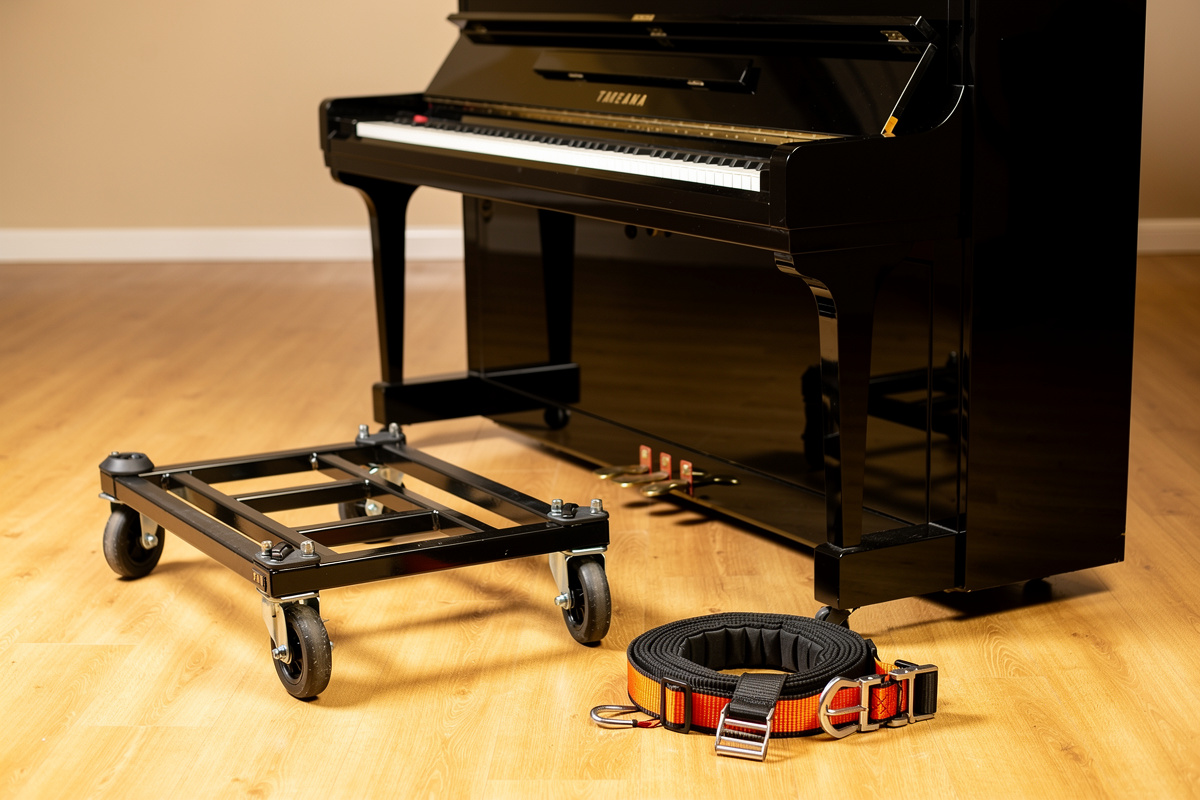
How we move them: Upright pianos are secured with heavy-duty straps, placed on a specialized piano dolly, wrapped in padded moving blankets, and moved by at least two trained movers — three or more on stairs.
Baby Grand Pianos
Baby grands (up to about 1.5 metres long) must be laid on their side for transport after the lid, music rack, and pedal lyre are removed. The legs are detached and wrapped individually.
How we move them: The piano is tilted onto a padded skid board, legs are removed and packed separately, and the whole instrument is carefully wrapped and secured in the truck.
Grand and Concert Grands
Full grand pianos (1.5–2+ metres) and concert grands (up to 2.7 metres) require the same process as baby grands but at a larger scale — and often require more crew members, more specialized equipment, and more careful planning of entry and exit routes.
The Piano Moving Process: Step by Step
1. Assessment. We measure doorways, hallways, staircases, and turns at both the pickup and delivery locations. We identify any tight spots that need special handling.
2. Disassembly. Removable parts — lids, legs, pedal lyre, music stand — are taken off and wrapped individually.
3. Wrapping. The main body of the piano is covered in thick moving blankets and secured with stretch wrap. This protects the finish from scratches and dings.
4. Loading. Using a piano dolly and ramps, the instrument is moved to the truck. Upright pianos are secured against the wall of the truck. Grands are laid on a skid board.
5. Transport. The piano is secured inside the truck with straps to prevent any movement during transit.
6. Delivery. The process is reversed at the destination. The piano is brought to its new position and legs or other parts are reattached.
7. Placement. We position the piano where you want it. We recommend avoiding exterior walls (temperature fluctuations) and direct sunlight, which can damage the finish and affect tuning.
Why You Should Never Move a Piano Yourself
Every year, people attempt to move pianos without professional help — and the results are predictable:
- Injury. Piano-related injuries are among the most serious in amateur moves. Back injuries, crushed fingers, and falls on staircases are common.
- Instrument damage. Dropping a piano, even from a small height, can crack the soundboard — a repair that can cost thousands of dollars, or render the instrument unplayable.
- Property damage. A piano rolling uncontrolled down a staircase doesn't just damage the piano. It damages walls, floors, railings, and anything in its path.
The cost of professional piano moving is a fraction of the cost of repairing or replacing a damaged instrument.
How Much Does Piano Moving Cost?
Piano moving costs depend on:
- The type of piano (upright, baby grand, grand)
- Distance between locations
- Whether stairs are involved
- Whether the piano needs to be craned (for buildings where standard access isn't possible)
Contact us for a specific quote. We'll always be upfront about costs before the job begins.
After the Move: Piano Care
Once your piano is in its new home:
- Wait before tuning. Give the instrument 2–4 weeks to adjust to the temperature and humidity of its new environment before calling a tuner.
- Avoid placement near heating vents, windows, or exterior walls where temperature swings are greatest.
- Use a humidity control system if you live in an area with extreme seasonal changes.
Trust FreshMove With Your Piano
We've moved uprights and grands throughout Toronto and the GTA. Our crew uses professional piano dollies, padded skid boards, and moving blankets — never improvised equipment. We know how to navigate condo elevator restrictions, tight stairwells, and challenging layouts.
Call 647 625 5811 to book your piano move.
FAQ
Frequently asked questions
Can I move a piano myself?+
It's strongly not recommended. Pianos weigh 200–500+ kg, have a high centre of gravity, and contain delicate internal mechanisms. The risk of injury and damage is significant.
Do I need to tune my piano after moving it?+
Yes. Moving affects a piano's internal tension and humidity exposure. Plan to have it tuned 2–4 weeks after the move to let it stabilize in its new environment.
How much does piano moving cost in Toronto?+
Piano moving cost depends on the type of piano, the distance, and the complexity of the route (stairs, tight corners, etc.). Call us at 647 625 5811 for a free, specific estimate.